Horror Mechanics
Description
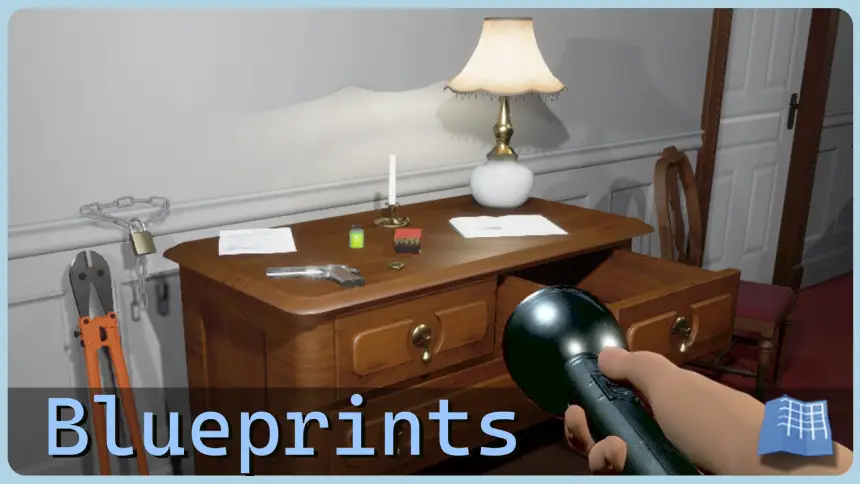
Horror Mechanics is a template for first person horror games that includes most popular mechanics such as interactive drawers, doors, lights, puzzles, examinable objects and more.
First person arms/body, interactive objects, drawers, doors, interactive lights, puzzles, inventory system, examinable objects and keys, all integrated into a "generic checkpoint system" interface.
Features:
Furniture with interactive drawers / doors
Physics based/animated interactive doors
Examinable objects: examinable environment objects and inventory items, with interactive spots
Documents: Books and Notes with textures shared between 3D actors in-level and on screen (2D)
Inventory System: Manages all collected items, documents, wieldable items (flashlights, weapons)
Interactive lights: desk lamps, ceiling lights, light switches
Keys: Examinable keys and VirtualKeys (not listed in inventory list) for unlocking doors or furniture drawers / doors
Wieldable items: equip-able items like flashlights and weapons, uses a simple character interface for playing animations in both first person arms and body
Puzzles: actor class for interactive actors, with implementable events for combining inventory items into puzzles
Objectives: basic objective system for adding, activating, and triggering in-level event dispatchers
Actor for triggering events when player is looking / not looking at certain directions
Basic physics manipulation
Basic UI inventory system: dragging, reordering, combining and discarding inventory items | viewing collected documents
Basic Checkpoint / SaveGame system for all actor classes
Player character with first person arms and separated first person body (this means that you need to be able to edit your character mesh in a DCC software like Blender, or use a simplified (but functional) different version from the screenshots/videos)
Technical details
Number of Blueprints: 40+
Input: Keyboard/Mouse, Gamepad
Network Replicated: No
Supported Development Platforms: Windows
Supported Target Build Platforms: Windows
Documentation: See description
Related assets